How does environmental variation affect animal decision-making and resultant ecological outcomes?
Roving Reef Herbivores
Herbivorous reef fishes, such as parrotfish and surgeonfish, play a critical role in maintaining healthy coral-dominated reef states, but we still know relatively little about how they incorporate social and environmental information when deciding when, where, and how much to forage. We know that herbivores tend to prefer foraging near refuge habitat and forage for longer periods of time when in social groups, likely reflecting responses to perceived predation risk. However, we also know that some species, particularly parrotfishes, are highly territorial in complex reef slope habitats. The relative importance of agonistic and facilitative information from nearby individuals is an open question. Several of our projects aim to determine how social and habitat contexts interact to affect movement and foraging decisions in herbivorous reef fishes so that we can better understand their functional roles on coral reefs. In parrotfishes, we are also investigating how territoriality shapes foraging patterns and how those foraging patterns change through time.
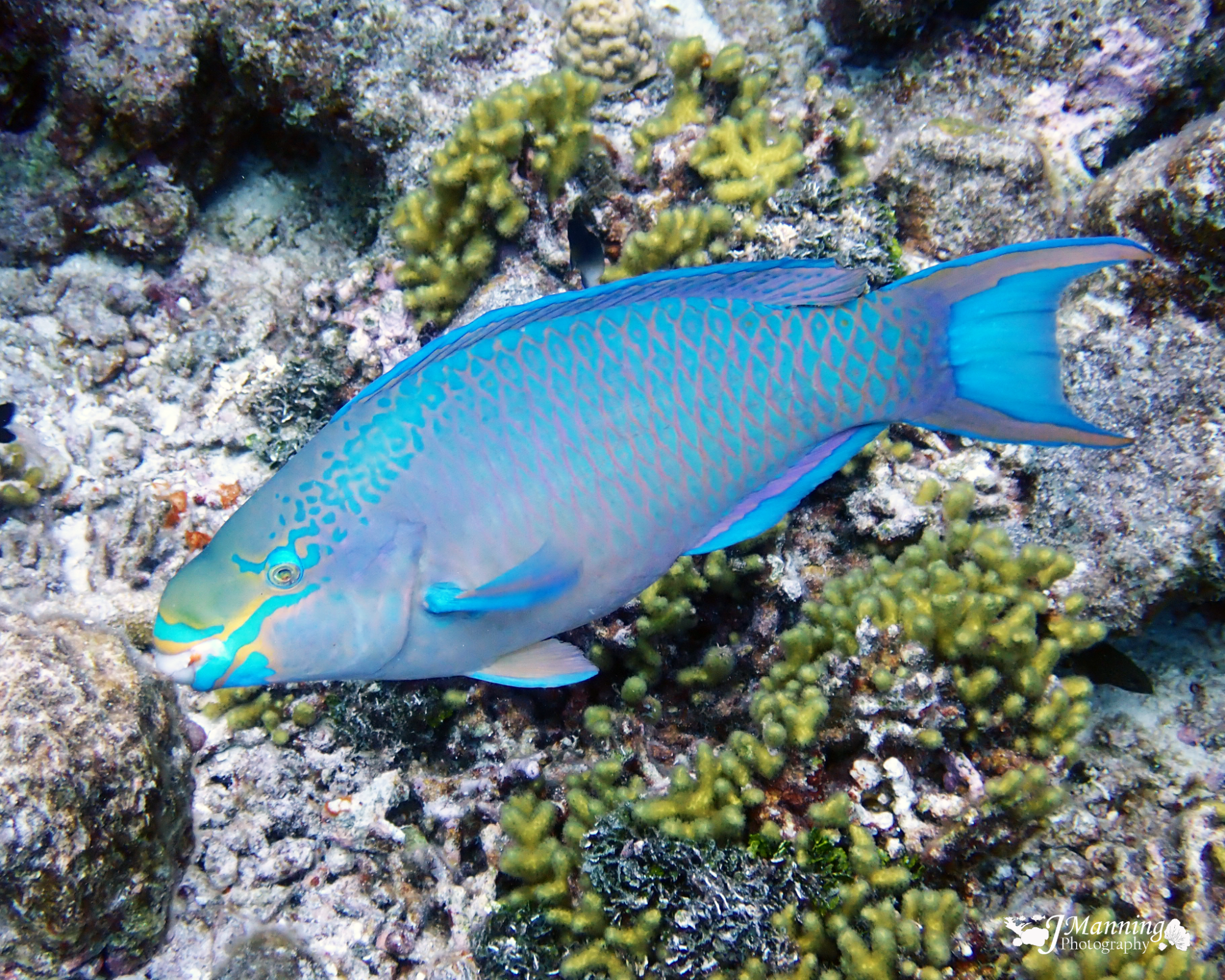
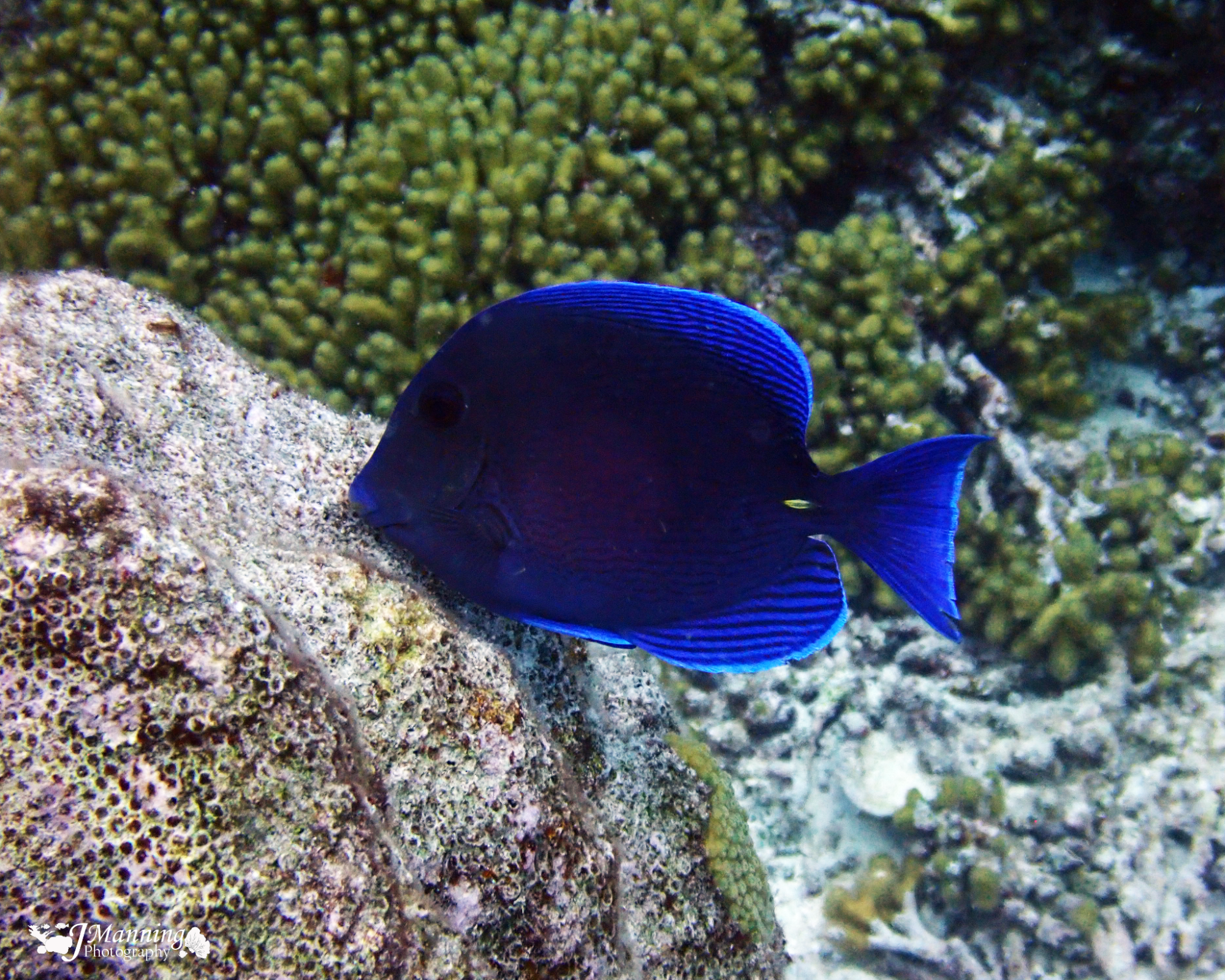
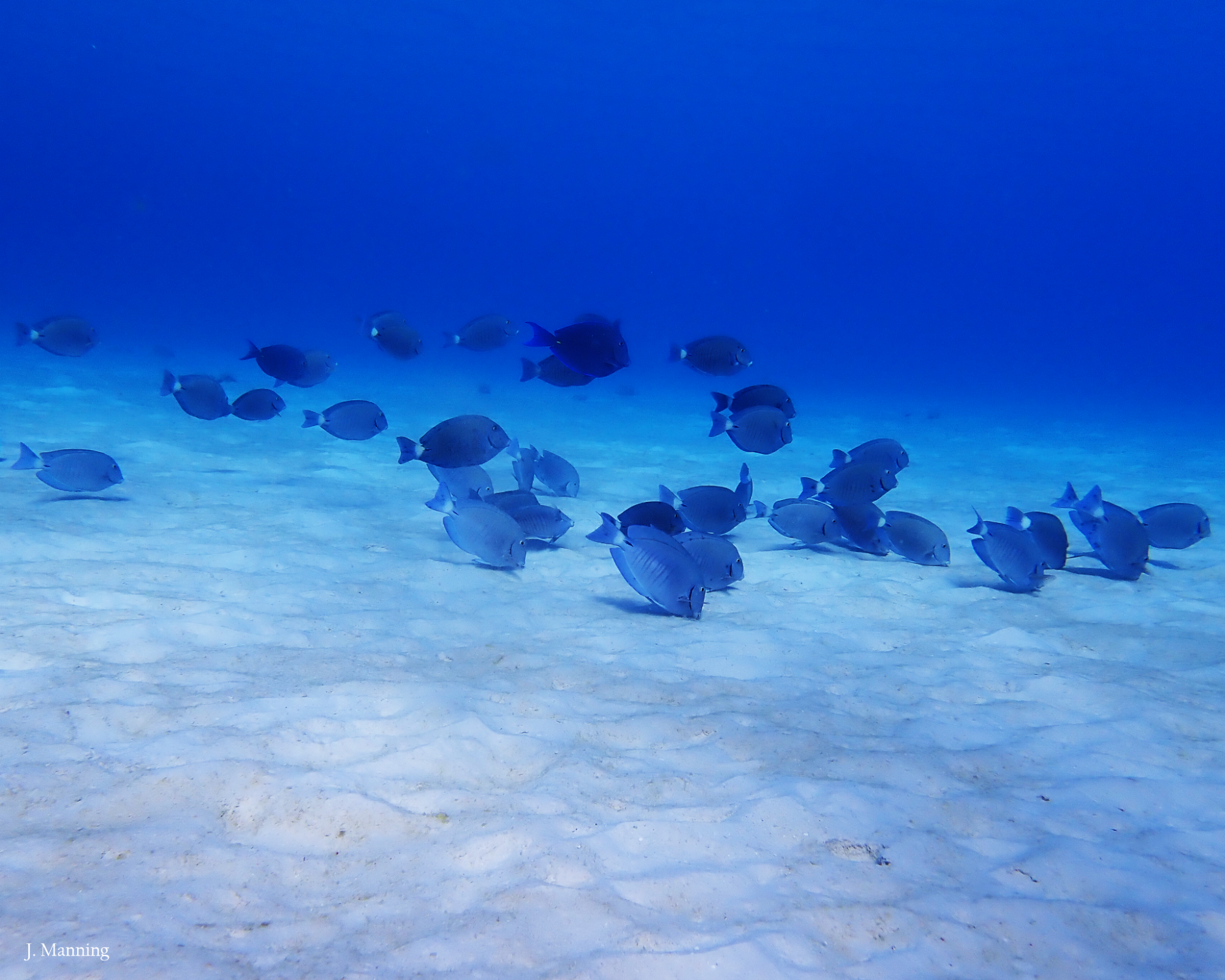
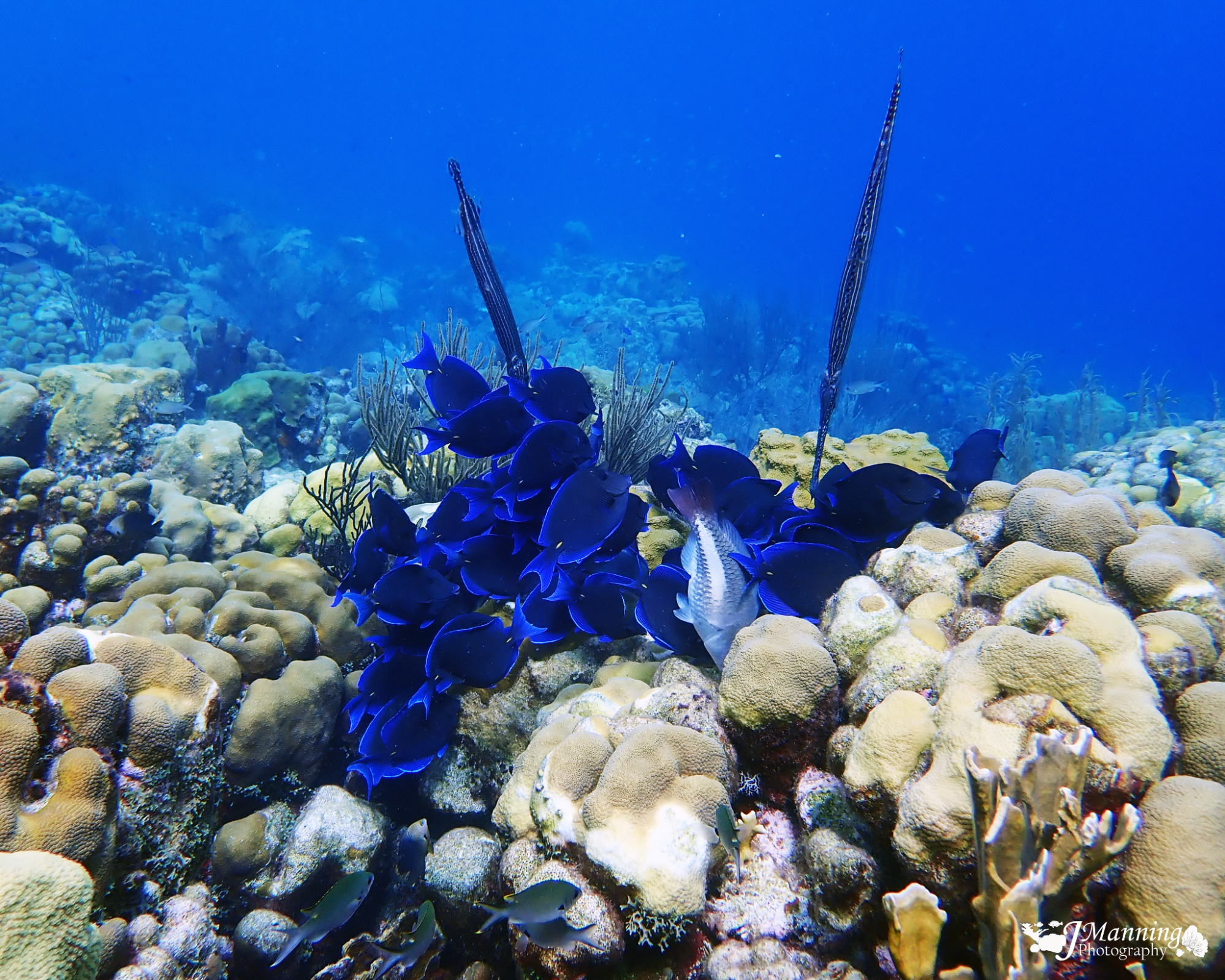
A queen parrotfish (Scarus vetula; top left) and blue tang (Acanthurus coeruleus; top right) foraging solo on the reef slope. Social groups foraging in less complex reef flat habitat (Acanthurus sp.; bottom left) and more complex reef slope habitat (Acanthurus coeruleus and Scarus vetula; bottom right) foraging in less complex reef flat habitats. Photos taken in Curacao and Bonaire (J. Manning).
Corallivores
We have two research projects in the lab that are focused on understanding the behavior of four-eye butterflyfish (Chaetodon capistratus). First, we are investigating how behavior differs within monogamous pairs and the role habitat context plays in shaping these differences. Specifically, we want to know if there are differences in foraging and vigilance among individuals in these pairs, and how body size and habitat complexity influence these patterns. The second project is focused on investigating foraging preferences in these fish. Stony coral tissue loss disease (SCTLD) has spread rapidly throughout the Caribbean and prior work has highlighted the potential role that butterflyfish may play in contributing to the spread of disease. We want to know if butterflyfish are preferentially foraging on diseased coral tissue relative to healthy coral tissue and if they are targeting certain species.
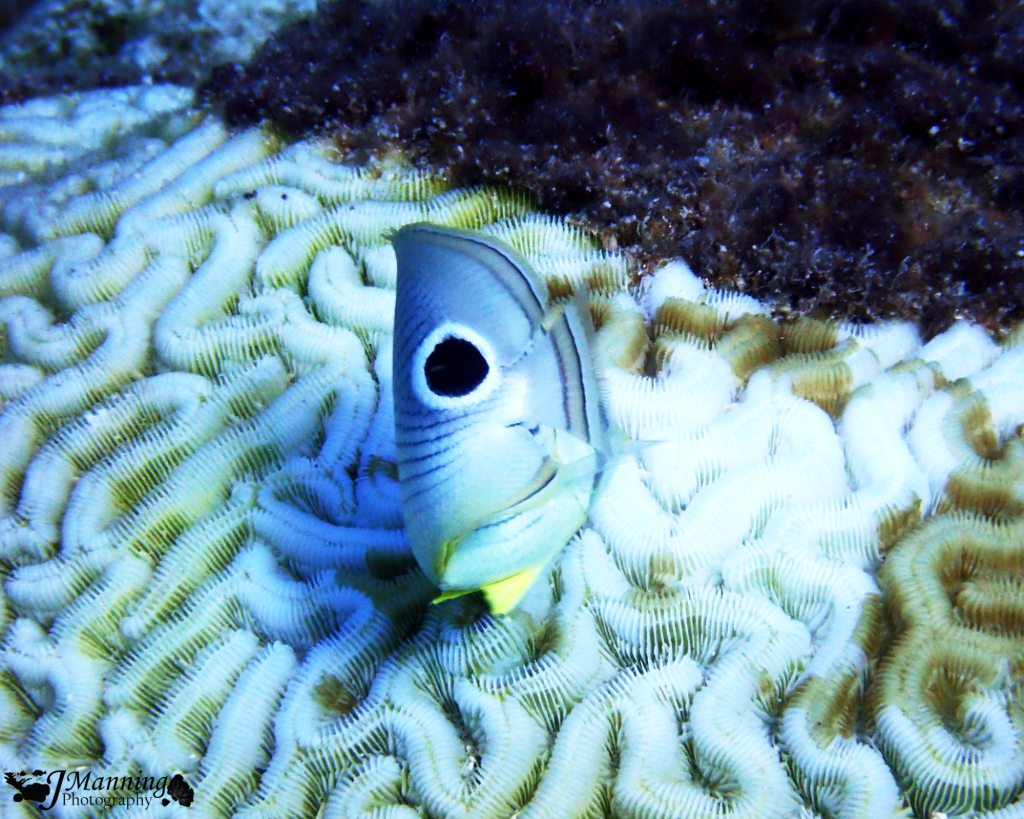
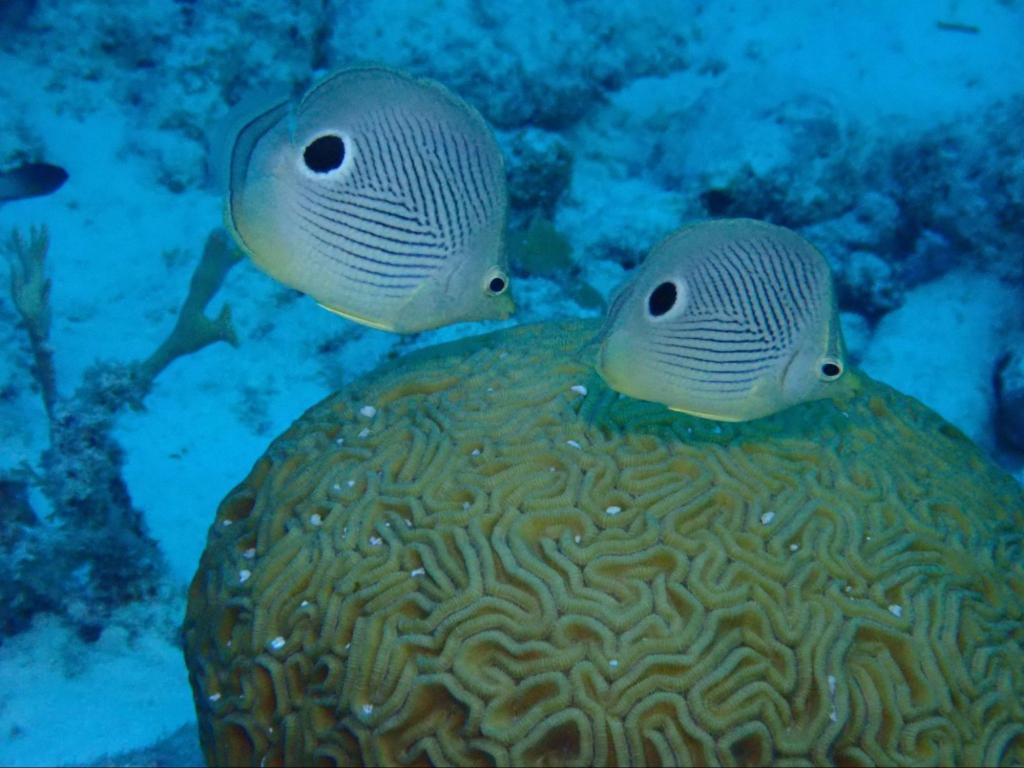
A pair of four-eye butterflyfish (Chaetodon capistratus) swimming over a Diploria labyrinthiformis (left) and another individual biting the disease boundary of a Colpophyllia natans infected with stony coral tissue loss disease. Photos taken in Bonaire (J. Manning).
Territorial Herbivores
Some damselfishes are highly territorial, defending algal lawns from other herbivorous reef fishes, and play an important role in shaping patterns of diversity and the distribution of algae on coral reefs. In some areas, these damselfishes form territorial neighborhoods in which several damselfish territories might border one another. One of the lab projects is investigating how neighborhood size and shape affect per capita defensive strategies of neighborhood members and ultimately access to these areas by roving herbivorous reef fishes (e.g., parrotfishes and surgeonfishes). Do neighboring damselfish share the cost of defense, allowing for increased allocation of time for other behaviors (e.g. farming and foraging)? Or is it every neighbor for themselves?
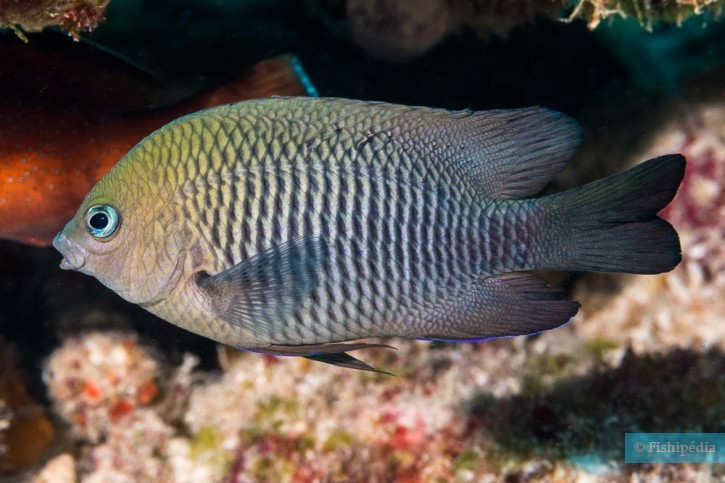
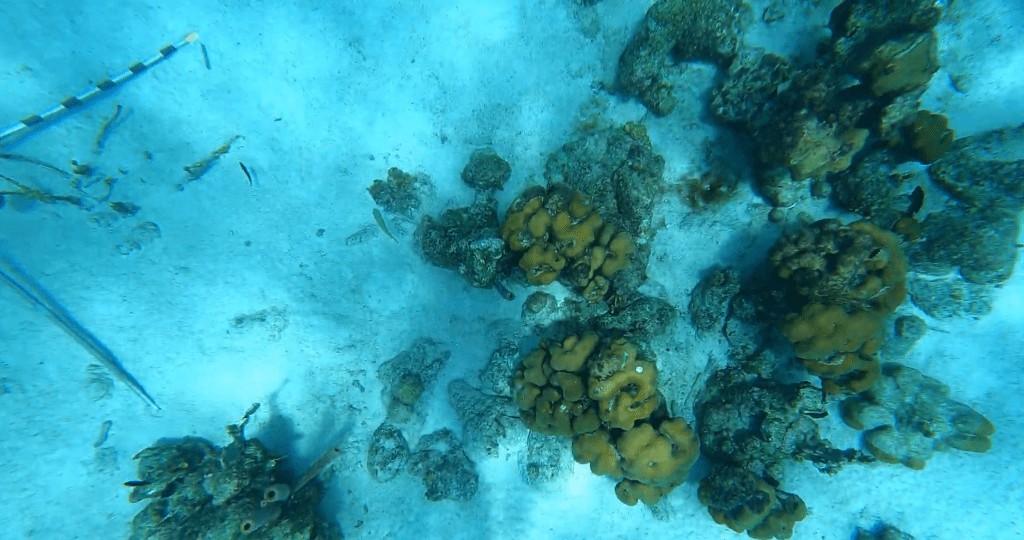
We filmed various sized neighborhoods of longfin damselfish (left; Stegastes diencaeus, photo by François Libert at fishi-pedia.com) for 4 hours in stereo using GoPros mounted to tripods (right; feet shown)
Garden Eel Colonies
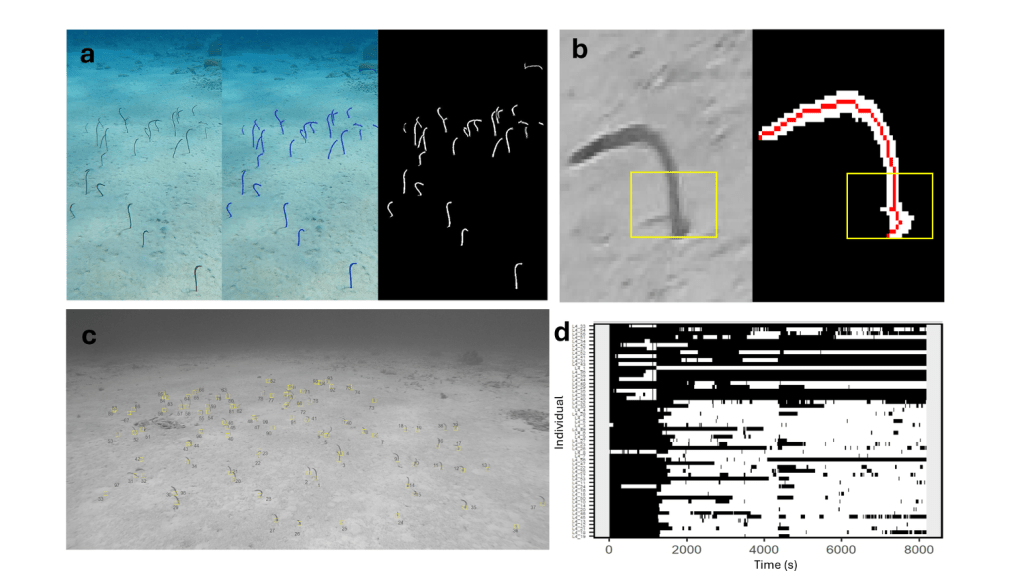
Social context is a key mediator of behavioral decisions, influencing how individuals perceive and respond to their environment. Substantial theoretical and empirical work has demonstrated the significance of social information in underpinning emergent behaviors such as collective foraging and predator evasion. In efforts to gain a general mechanistic understanding of collective behavior, the field has focused on the average performance of homogenous groups over short-time scales in the laboratory. The capacity for social information transfer, however, varies with group size, composition, and topology. We know little, therefore, about natural variation in the collective behavior of wild animal groups. The fixed colonies of brown garden eels (Heteroconger longissimus) offer a remarkable opportunity to study how network characteristics translate to behavioral differences. This zooplanktivorous fish follows an unusual lifestyle, entailing anchorage of the posterior part of their body to the sides of burrows in the seabed near others, enabling individuals to be tracked across months and years. One of the PhD students, Ella Henry, use long-term observation and field experiments processed using computer vision approaches to understand how variation in colony size and topology influence individual and colony-level behavior.
Evolution of Social Grouping
One of the PhD students, Sam Rothberg, is currently studying the ecology and evolution of social grouping using western tent caterpillars (Malacosoma californicum) as a study species. Tent caterpillars spend larval development living in silk “tents” that they spin with their group mates. While they originally live with and construct tents with siblings, as they get older, groups may combine with each other into larger and less related groups. I am interested in understanding this process of group merging because of the ways in which it does not fit cleanly with many existing theories of social behavior. I am conducting experiments asking whether groups of relatives behave differently from mixed family groups, and whether merging can explain aspects of the evolutionary stability of grouping in this species. All the work for these projects takes place on popular trails in Boulder, CO, so I have also appreciated the opportunity to talk to hikers about insect social lives.
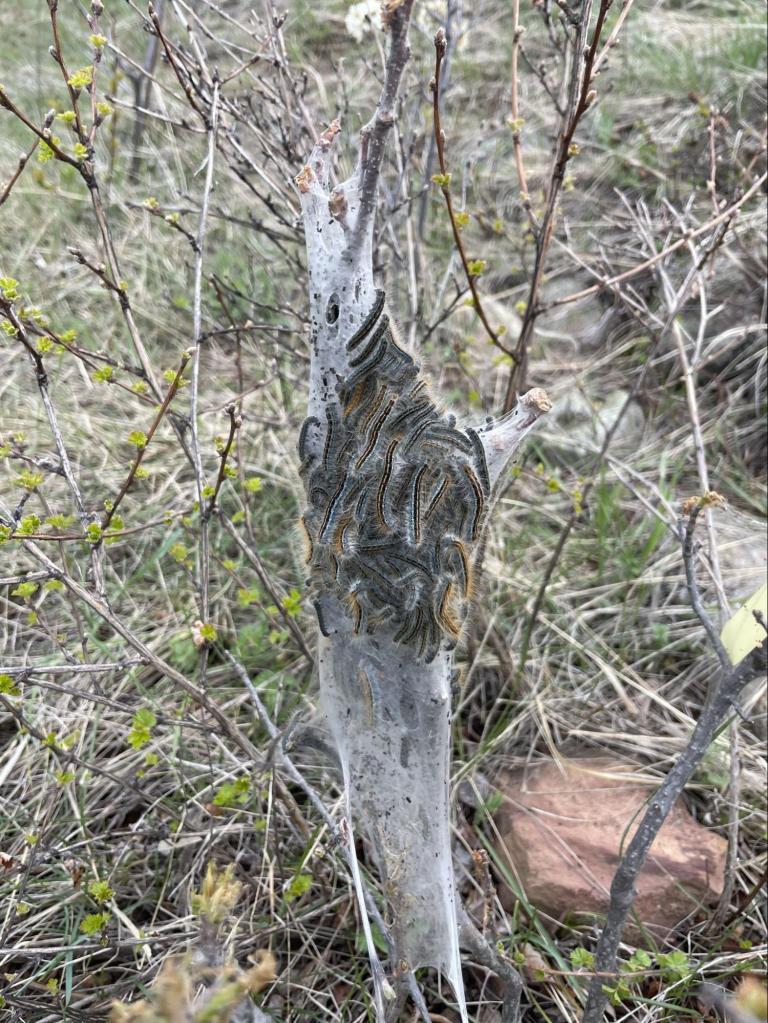
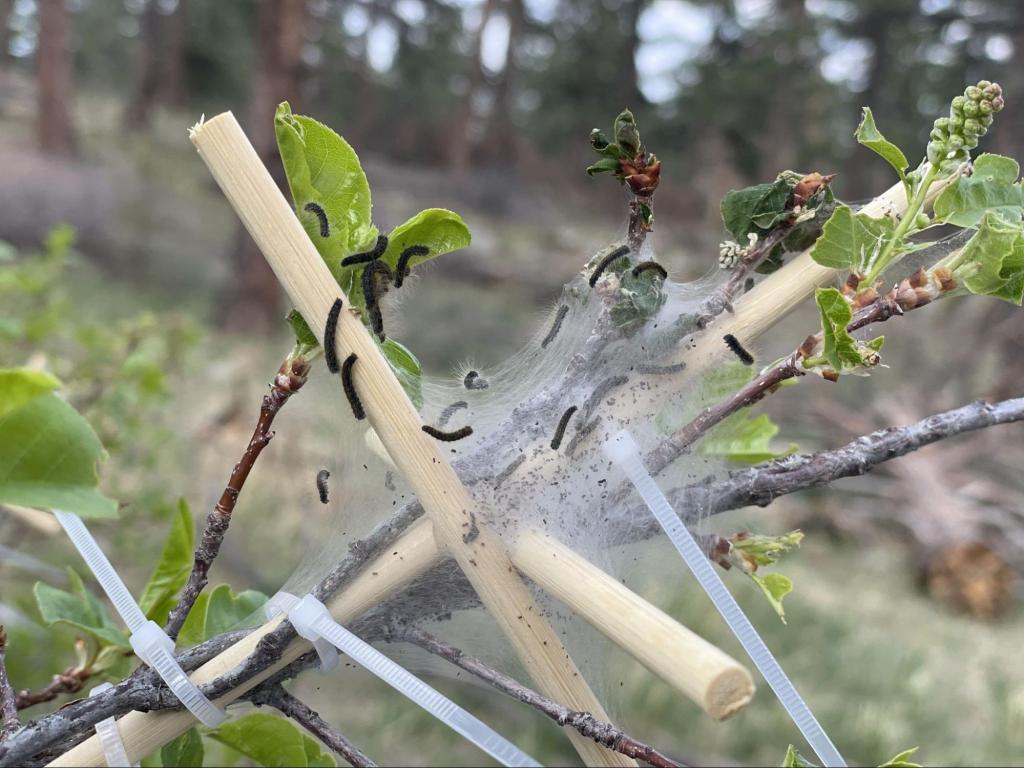
Above are some of the Western Tent Caterpillars around Boulder, Colorado.
 Gil Lab