How does anthropogenic environmental change affect the ecological function of communities?
Plastic Pollution
Plastic pollution is inundating marine habitats worldwide. As plastics and their chemicals have been shown to induce changes in behavior and foraging across a wide variety of taxa, it is likely that this ubiquitous pollution will have complex, cascading effects on ecosystems. We aim to address: How in-situ plastic pollution impacts foraging behaviors and visitation within coral reef fish communities, if the response varies if the plastic is bio-fouled or clean, and how these responses vary across families and functional groups.
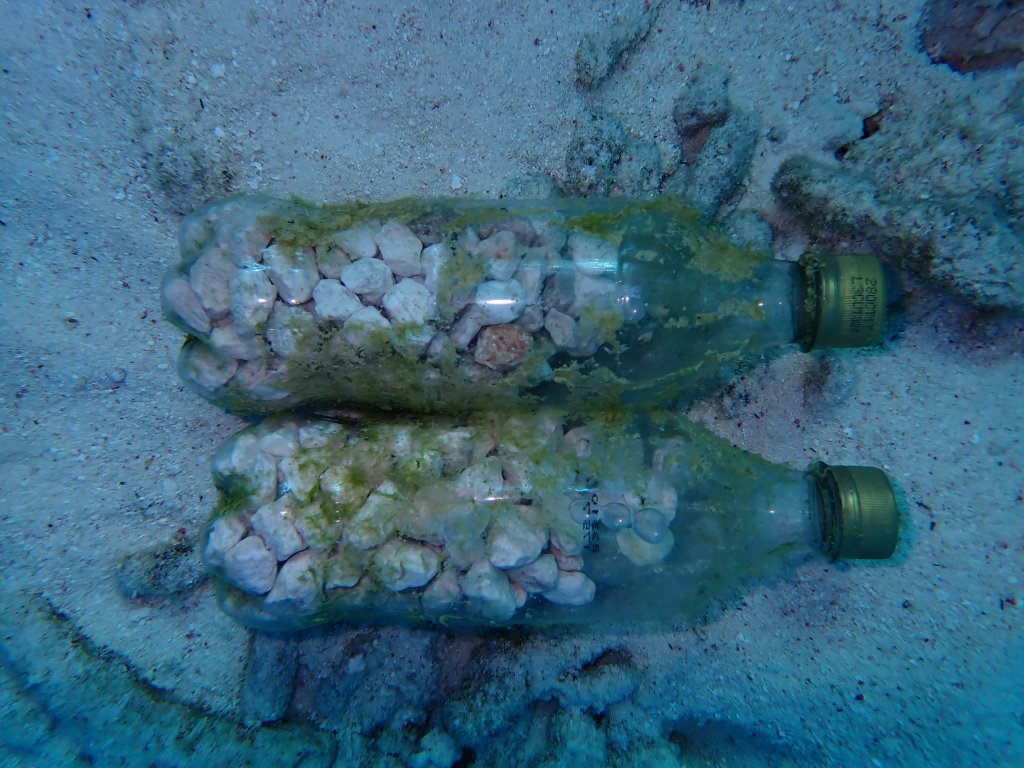
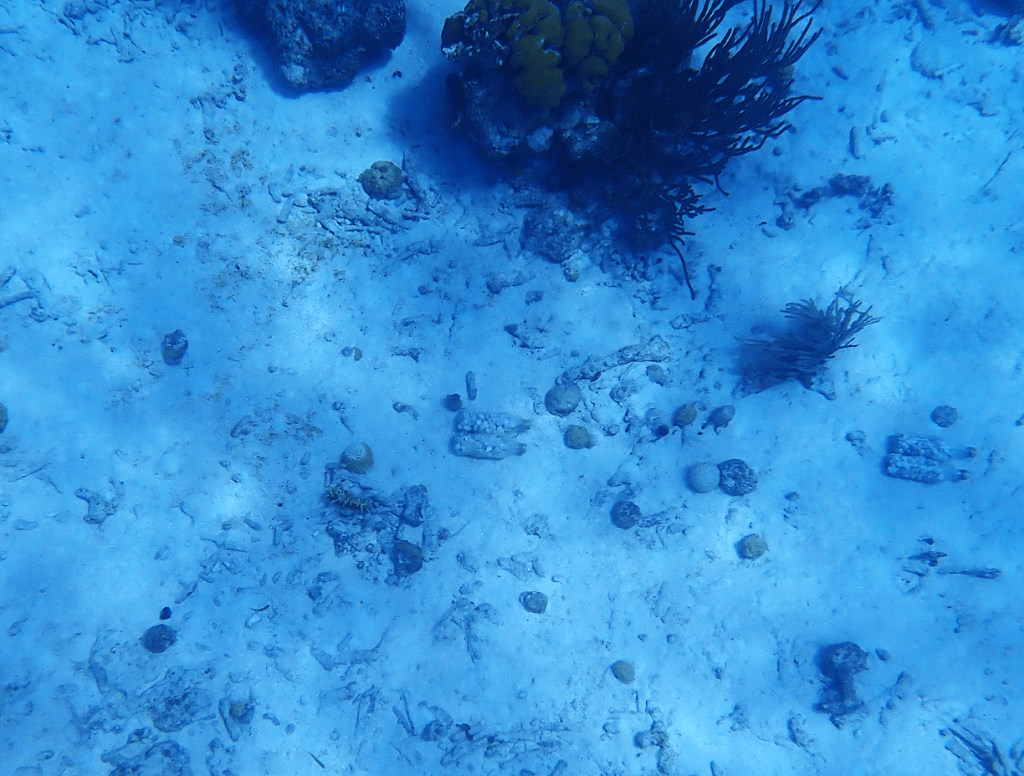
Ultimately, we hope to inform predictions on how plastic pollution will impact herbivory pressure in Caribbean coral reefs and thus the competitive balance between algae and coral resources.
Increased Nutrient Load
Coral reefs are shaped by competition between corals and algae, with healthy reefs typically dominated by corals. Herbivorous reef fishes play a crucial top-down role in maintaining this balance by grazing on algae and preventing overgrowth. However, increasing nutrient inputs to coastal waters enhance algal growth, shifting competition in favor of algae and threatening reef structure, function, and resilience.
Although many herbivorous fishes seem to preferentially feed on nutrient-enriched algae, potentially counteracting some negative effects of enrichment, their foraging behavior is also constrained by predation risk. According to Optimal Foraging Theory, herbivores balance the energetic benefits of feeding against the combined costs of foraging and predation. While nutrient enrichment can reduce foraging costs by increasing algal quality or abundance, predation risk may still limit feeding activity.
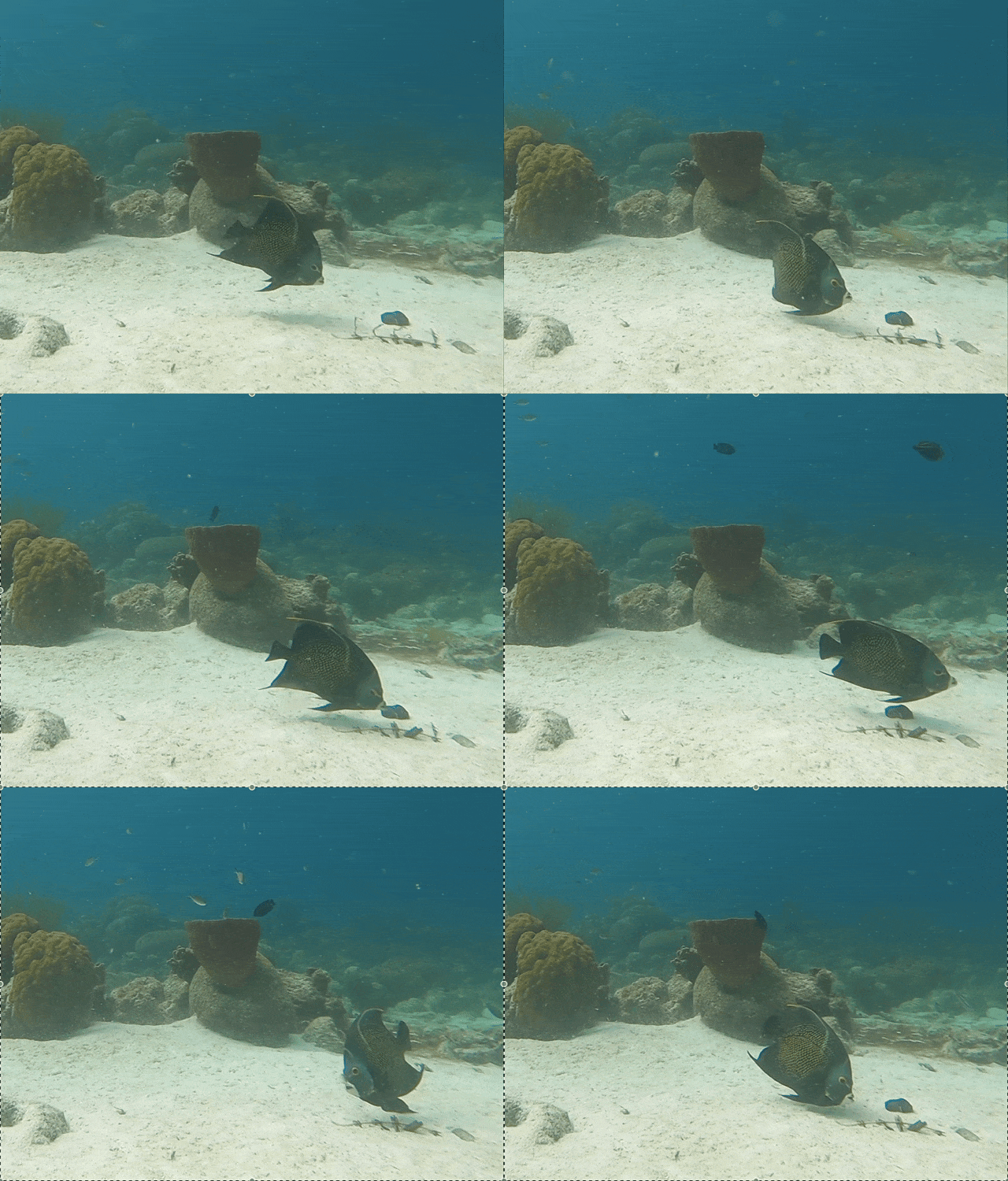
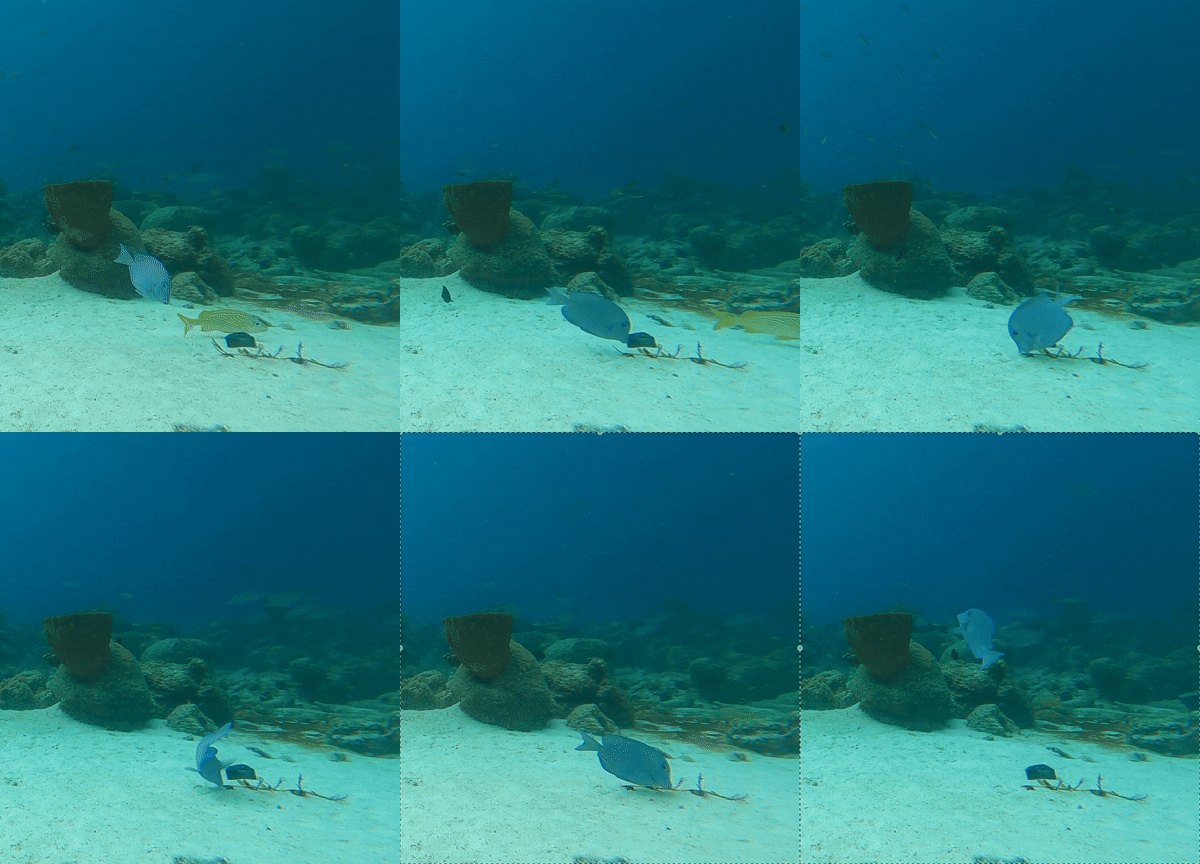
To understand how these interacting bottom-up (nutrient) and top-down (predation) forces shape feeding behavior, we are conducting in situ experiments that independently and jointly manipulate nutrient availability and perceived predation risk. This approach allows us to uncover the behavioral mechanisms linking environmental change to patterns of algal dominance on coral reefs.
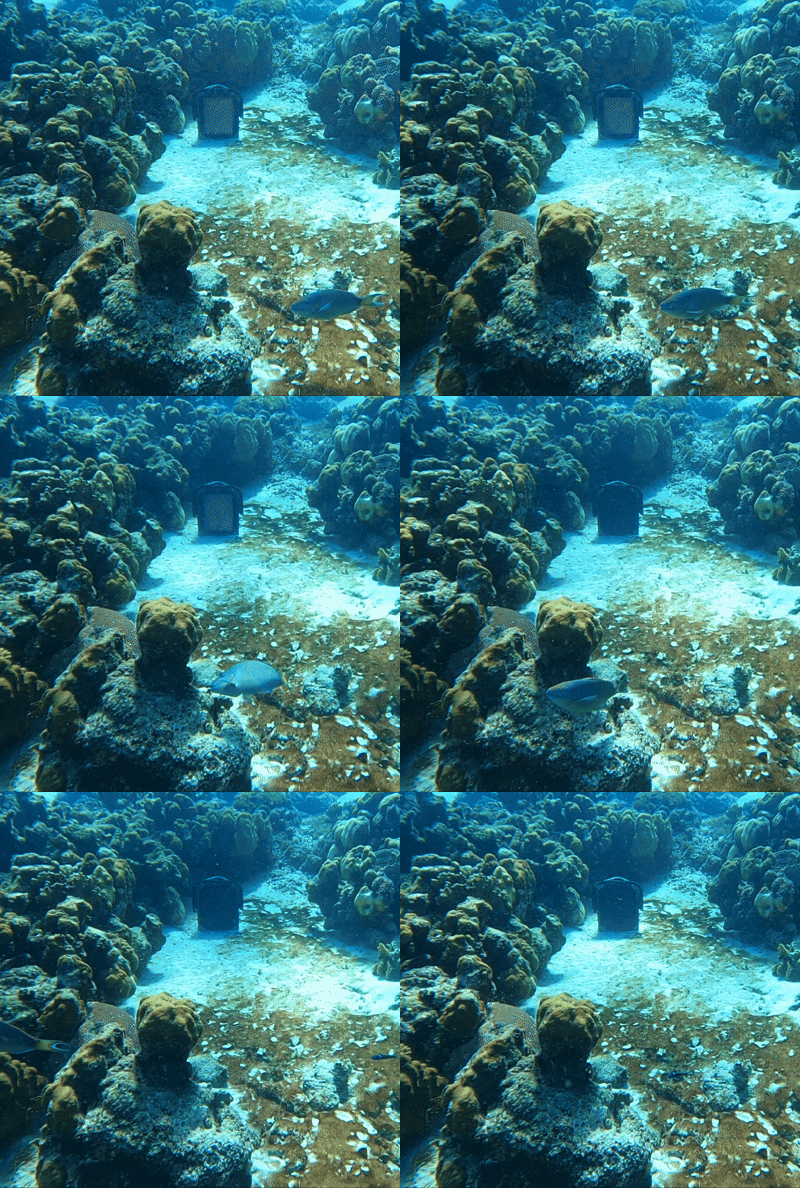
Habitat Restoration
Coral restoration can alter fish visitation patterns and community composition in the restored area, and certain fish and invertebrates can be beneficial to coral growth and survival. However, it’s yet unclear how the landscape design of coral restoration may differentially impact visitation and community patterns.
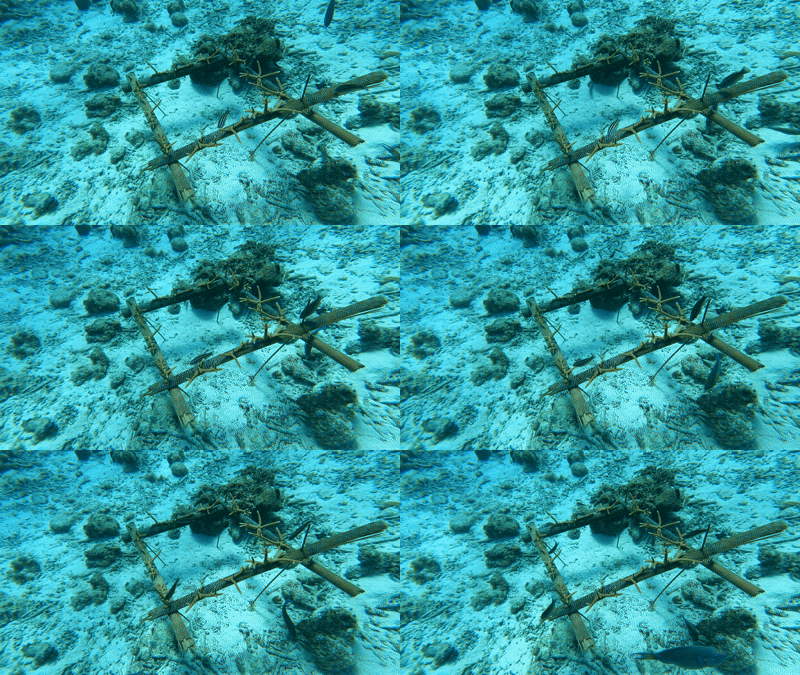
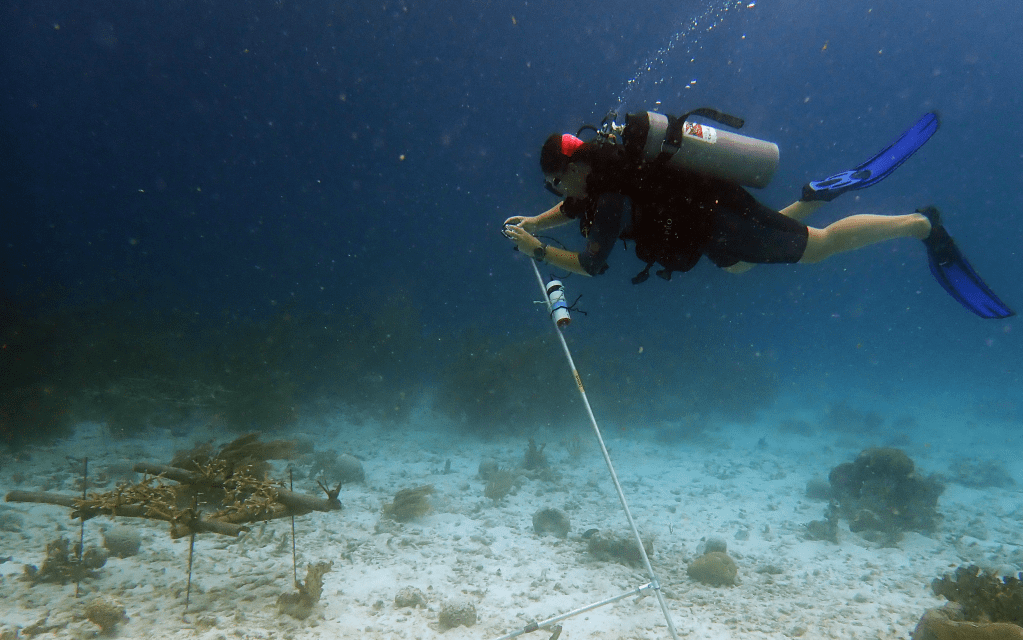
We are investigating if the landscape design of coral outplants can be optimized to attract visitation and promote foraging from beneficial coral-associated fishes, while limiting the visitation by fishes detrimental to coral growth and survival. Specifically, we are looking into how patch density, habitat connectivity, and matrix composition influence taxon-specific visitation and foraging patterns near restoration outplant units of Acropora cervicornis in Curacao.
 Gil Lab